
By Sifu Kisu Stars
I do not claim to be an authority beyond the style we practice. My experience rests on nearly fifty years of Northern Shaolin training and teaching, a continuing relationship with the same teacher, and three generations of students of my own.
That experience carries a responsibility: to distinguish what I know from what I do not, and what was transmitted to me from what I have developed through my own practice. I expect the same honesty from anyone who presents themselves as a teacher.
What concerns me is the damage done to traditional Chinese martial arts by people who manufacture credentials, borrow reputations, invent relationships, and crown themselves authorities. Students invest their trust, time, and money in those claims. When the deception becomes apparent, the distrust reaches beyond the person responsible.
There is a fundamental difference between possessing authority and claiming it. Students deserve to understand that difference before committing years of their lives to someone’s instruction.
A Photograph Is Not a Lineage
Meeting a respected teacher does not make you their disciple. Standing beside them for a photograph does not establish their endorsement, permission to represent their system, or recognition of your mastery.
Traveling to China and studying for six months does not, by itself, make you a grandmaster. Learning a few movements from a teacher in a tournament parking lot does not establish you as a lineage holder.
Those experiences can have value. Describe them accurately.
“I attended his workshop” is an honest statement. “He showed me this exercise” gives appropriate credit. The deception begins when a brief encounter is presented as evidence of sustained instruction, a close relationship, or a formal transmission that never occurred.
Carefully chosen words can still create a deliberately false impression. Encouraging an audience to imagine twenty years of training when you received twenty minutes of instruction is misleading, even if you avoid stating the lie directly.
A photograph documents a moment. It cannot establish what was taught, how well it was learned, or what responsibility was entrusted to the person beside the teacher.
When the photograph is used to imply credentials the encounter did not confer, someone else’s reputation becomes part of the sales pitch.
How the Crown Gets Made
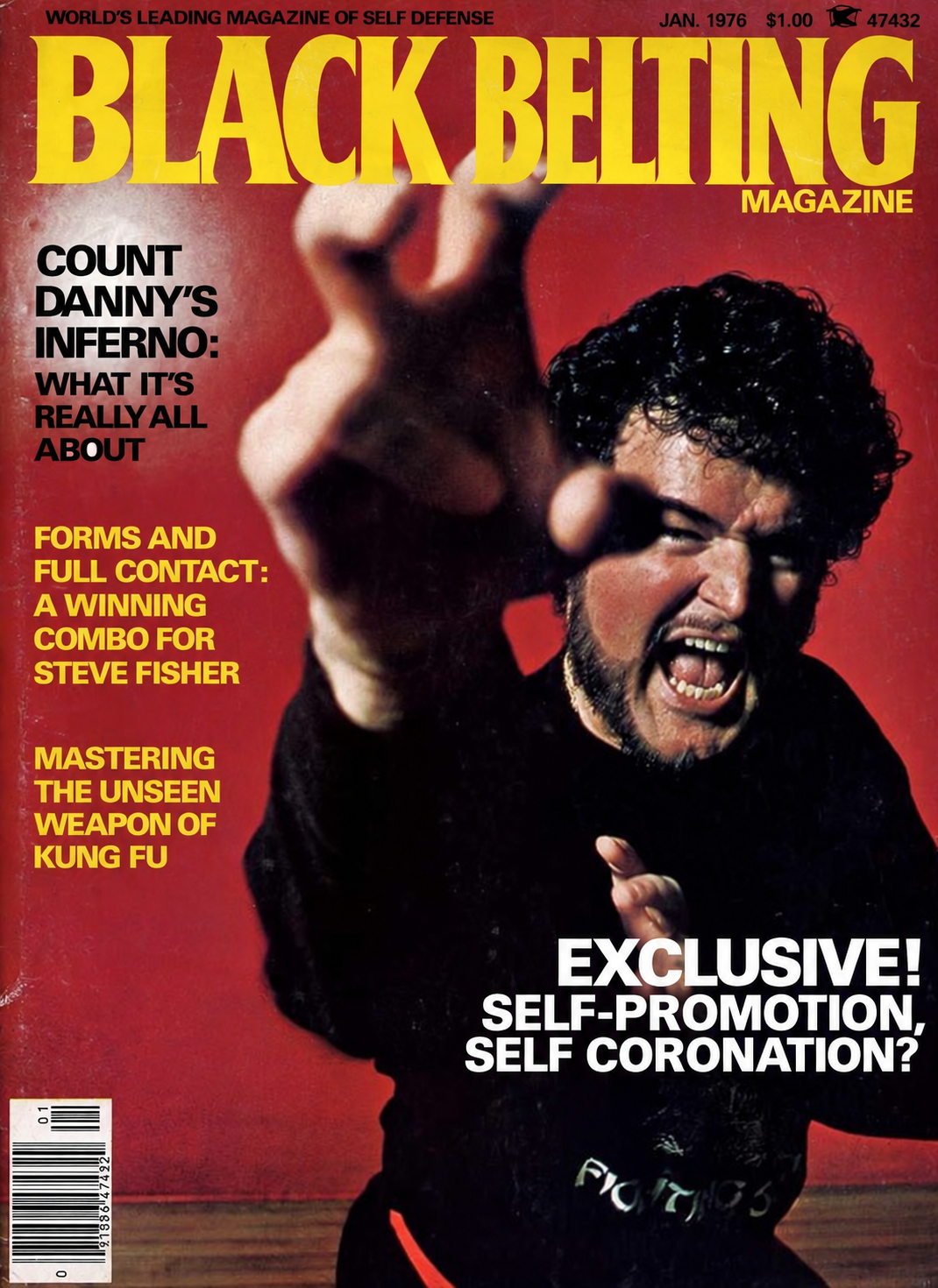
Self-coronation occurs when a martial artist declares themselves an authority and expects the declaration to substitute for evidence.
A title appears. A biography expands. A seminar becomes an apprenticeship. A casual compliment becomes an endorsement. An ordinary encounter is retold as a private transmission.
The account circulates through websites, interviews, event introductions, and students who trust their teacher. Eventually, people cite one another, creating the appearance of independent confirmation even though every version leads back to the same unsupported story.
Repetition does not establish truth.
Who granted the title? What does it mean within that tradition? Who taught the material, and over what period? What recognition or authorization is being claimed?
These are reasonable questions. The greater the claim, the greater the responsibility to substantiate it.
A responsible teacher should be able to explain their background without treating every inquiry as an insult. Histories can be complicated, records incomplete, and recollections disputed. Those circumstances require care about what can be established. They do not excuse fabrication.
Lineage Carries Obligations
Lineage records relationships between people. Behind an account of transmission are teachers who gave their time, students who did the work, and obligations accepted along the way.
Those names carry responsibilities. They should help explain how a practitioner came to know what they teach.
Claiming a transmission that never occurred appropriates that history. It also speaks on behalf of a teacher who may never have recognized the relationship being advertised.
A stolen lineage is a stolen relationship.
A legitimate lineage, however, does not guarantee competence, integrity, or teaching ability. Someone can have excellent teachers and understand little of what they received. Someone with a modest biography can possess substantial skill and communicate it well.
Both the history and the work deserve examination. Students should be able to ask where the instruction came from and assess what the teacher can demonstrate, explain, and help them learn.
A Stolen Manual Is Not an Education
We have had people travel considerable distances to visit our school, present themselves as interested students, and then steal a student manual.
An interested visitor is welcome. Using that welcome to take material without permission betrays the trust on which instruction depends.
A student manual represents work: lessons organized, explanations developed, and knowledge recorded to support training. Taking it without permission appropriates that labor. Passing its contents off as your own would compound the deception.
Possessing the manual does not establish that you trained in the system, understood its methods, or received permission to represent it. Its pages support instruction, practice, correction, and application. Reading them cannot establish the teacher–student relationship or experience they were written to support.
Taking someone’s teaching materials does not make their knowledge your accomplishment.
This also applies to reading / learning from books and YouTube videos published by popular martial art master. Just because you have a large following on YouTube, Facebook or TikTok does not make you a grandmaster…
Experience Must Remain Accountable
Years of practice matter. They give us experience to draw upon and responsibilities to fulfill. They do not make every opinion correct.
Seniority within one school does not establish final authority over every branch of a system. Expertise in one system does not establish expertise in all Chinese martial arts.
I can speak from my training, my teaching, and what I have observed. I must also be willing to say, “That is outside my experience,” or, “I do not know.”
Students deserve that clarity.
A teacher’s understanding becomes visible through their explanations, corrections, judgment, and ability to develop students. Their conduct reveals how they handle responsibility, disagreement, and the limits of their own knowledge.
Titles and years of service deserve consideration. They must still be accompanied by competence and honest conduct.
Teaching Is a Responsibility
I regard teaching as a responsibility to preserve, examine, and transmit what I have received.
That means acknowledging my teacher, identifying my own contributions, and accepting responsibility for what I ask students to practice. It means explaining when I am passing on an inherited method and when I am offering my own interpretation.
It does not give me ownership of the tradition or dominion over everyone who practices it.
We can uphold standards and challenge inaccurate claims without appointing ourselves rulers of the art. We can respect our teachers while examining their instruction carefully. We can develop what we practice while remaining honest about what we have changed.
That honesty gives future students a clear account of what they are receiving. Without it, inherited instruction, personal interpretation, and invention become tangled together.
Students Pay for the Fiction
Prospective students often have limited ways to assess a teacher’s claims. They encounter confidence, titles, photographs, and an elaborate biography. They may reasonably assume that the history is truthful.
If it is fabricated, they enter the relationship under false pretenses.
They can spend years studying material whose origins have been misrepresented. They may defend the invented history out of loyalty, then pass it to their own students. By the time questions arise, friendships, identity, and years of investment may be tied to preserving the story.
The lie becomes harder to confront because other people have built part of their lives around it.
This is why false credentials matter even when the person making the claims possesses some skill. Teaching something useful does not excuse deceiving students about its origins, the extent of one’s training, or the recognition one has received.
Students deserve truthful information so they can choose their teachers for themselves. They also deserve to ask reasonable questions without having their loyalty put on trial.
Put the Claims Beside the Evidence
Teachers need to promote their work. There is nothing wrong with explaining what you offer, sharing your experience, or taking pride in your accomplishments.
But your accomplishments must be yours.
Name your teachers accurately. Describe the extent of your training honestly. Give credit for what you received. Identify what you developed yourself. If you claim a title, endorsement, or authorization, be prepared to explain its basis.
Those of us who challenge dishonesty owe the same care to the truth. Identify the claim. Examine the evidence. Distinguish what can be established from what is merely suspected. Anger does not relieve us of the obligation to be accurate.
The question is straightforward: are people telling the truth about the qualifications they use to obtain trust?
Traditional Chinese martial arts deserve teachers whose claims can withstand examination. Students deserve to enter instruction with their eyes open. Our teachers deserve to have their names attached to relationships that actually existed.
If your knowledge is substantial, demonstrate it. If your history is legitimate, explain it. If your teaching has value, let that value become evident in the people you teach.
A crown placed upon one’s own head carries little weight. Authority is earned through practice, demonstrated through conduct, and strengthened by the informed recognition of others.
Proclaiming yourself does not complete that work.
Learn more about Sifu Kisu and his lineage here.