Xingyi Quan History & Lineage

For generations, the teachings of Xingyi Quan have been preserved through direct transmission from teacher to student.

Xingyi Quan (Hsing-I Chuan) is one of the great classical martial arts of China, known for its direct striking power, disciplined simplicity, and deeply refined body mechanics. Behind its compact movements lies a long martial tradition preserved through generations of dedicated teachers.

The system practiced at 10,000 Victories in San Rafael comes through respected lineages connected to some of the most influential figures in the development of modern Chinese martial arts.

Rather than existing only as historical knowledge, Xingyi Quan continues to be transmitted through hands-on training, where the principles of structure, intention, and whole-body power are passed directly from teacher to student.
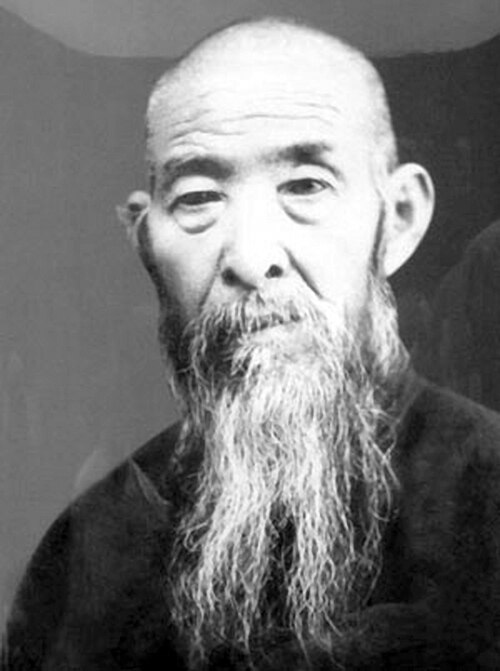
Origins of Xingyi Quan

Xingyi Quan developed in northern China several centuries ago. Early forms of the art are believed to have evolved from Six Harmonies Boxing, a martial system associated with Shaolin traditions.

Over time the art was refined into a direct and efficient method of combat training. Unlike many martial arts that rely on long choreographed routines, Xingyi focuses on a relatively small number of core movements practiced deeply.

These movements emphasize coordinated stepping, whole-body power, and the ability to move instantly from stillness into decisive action.

Because of this emphasis on efficiency and directness, Xingyi Quan became known as one of the most practical striking systems in Chinese martial arts.

Sun Lutang and the Internal Arts

One of the most influential figures in the development of modern Xingyi Quan was Sun Lutang (1860–1933).

Sun Lutang was a rare combination of martial artist and scholar. He studied Xingyi Quan under Guo Yunshen, later trained Bagua Zhang with Cheng Tinghua, and eventually became a highly respected teacher of Tai Chi Chuan as well.

Through his study of these arts, Sun recognized the shared internal principles underlying them — unified structure, intention-led movement, and coordinated whole-body power.

Sun Lutang was also among the first masters to publish widely accessible books on Chinese martial arts. His writings helped preserve important training methods and theory, making internal martial arts more widely understood in the modern era.

Because of his scholarship and teaching, Sun Lutang is often regarded as one of the most important figures in the transmission of the internal martial arts.

Transmission to Grandmaster Wong Jackman

The Xingyi Quan practiced at 10,000 Victories comes through the Sun Lutang tradition transmitted to Grandmaster Wong Jackman.

Wong Jackman received this Xingyi lineage through his teacher Yim Sheung Mo, who studied at the National Guoshu Institute in China and learned Xingyi Quan from Sun Lutang.

Grandmaster Wong Jackman later became widely respected for his deep knowledge of several classical Chinese martial arts, including Northern Shaolin, Xingyi Quan, Tai Chi Chuan, and Lohan.

Through his teaching, the full Xingyi system — including the Five Elements, Twelve Animals, linking forms, partner training, and traditional weapons — was preserved and transmitted to the next generation of practitioners.

Xingyi Quan in the United States

When Grandmaster Wong Jackman began teaching in the United States, Xingyi Quan was extremely rare.

At that time very few instructors possessed a complete Xingyi curriculum, and opportunities to study the art were limited. Through decades of teaching, Wong Jackman helped preserve and transmit this classical system outside of China.

Even today, comprehensive Xingyi instruction remains uncommon compared with many other martial arts.

Additional Teachers and Influences

In addition to studying with Grandmaster Wong Jackman, Sifu Scott Jensen also trained with several respected Xingyi Quan and internal martial arts teachers whose skills reflected older generations of classical training.

Liang Ke Quan

Liang Ke Quan was a highly respected master of Xingyi Quan and Bagua Zhang known for his powerful body mechanics and deep knowledge of the art. He was renowned for his ability to issue tremendous force through relaxed structure, demonstrating the internal power developed through decades of disciplined training.

Liang taught many variations of the Five Element methods and emphasized subtle body mechanics that allowed practitioners to generate power with minimal visible effort. His movements appeared extremely soft, yet his strikes could produce tremendous force.

In addition to his martial skill, Liang Ke Quan was known for his scholarship and calligraphy, often sharing philosophical reflections on martial training and the cultivation of Jing, Qi, and Shen — Essence, Energy, and Spirit.

Liang Ke Quan performs a Great Monkey Leap from Xing Yi Quan

Li Gui Chang

Grandmaster Li Gui Chang was a respected practitioner of Shanxi style Xingyi Quan, a tradition considered by many to represent the older roots of the art.

Although elderly when encountered, Li Gui Chang demonstrated remarkable power and speed. His strikes illustrated Xingyi’s famous ability to transition instantly from stillness into explosive movement without visible preparation.

His training emphasized the classical foundation methods of Xingyi, particularly extended practice of San Ti Shi (Three Treasures Stance) and the Five Element Fists, which develop deep structural strength and whole-body power.

Li Gui Chang represented a generation of martial artists who learned their skills during the Republican era in China, when martial arts were still practiced as practical combat systems.

Master Mike Bingo

Master Mike Bingo was an accomplished Xingyi Quan practitioner and decorated United States Special Forces veteran.

His training emphasized the practical combat applications of Xingyi principles, demonstrating how the Five Element methods could be applied in modern self-defense situations.

Master Bingo’s demonstrations of explosive power and practical technique illustrated how the principles of Xingyi Quan remain effective across very different environments and eras.

The Lineage at 10,000 Victories

Sifu Scott Jensen studied with Grandmaster Wong Jackman, inheriting this classical Xingyi tradition as part of his broader training in Chinese martial arts.

At 10,000 Victories in San Rafael, students learn Xingyi Quan as a complete system that integrates:

  • foundational stance training
  • Five Element striking methods
  • Twelve Animal tactics
  • linking forms
  • partner training and sparring
  • traditional weapons

This approach preserves the classical structure of the art while making its training accessible to modern students.

Living Tradition

Xingyi Quan has been preserved for generations through direct instruction and dedicated practice. Each generation of teachers transmits not only the movements of the art, but also the principles that give those movements their power.

At 10,000 Victories in San Rafael, students continue this tradition by training in the classical methods of Xingyi Quan — developing structure, focused intention, and whole-body power through consistent practice.

The lineage described above represents a living martial tradition passed from teacher to student over generations.

To learn how Xingyi Quan is practiced today and how its training develops power, structure, and focused intention, explore the Xingyi training at 10,000 Victories.

→ Xingyi Quan Training in San Rafael